
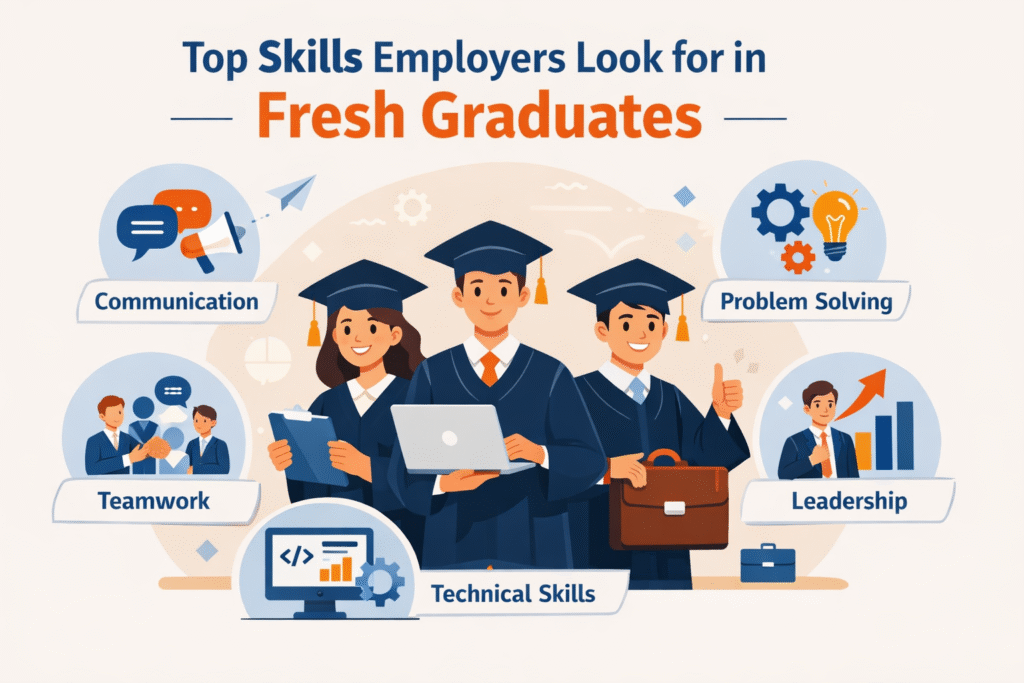
Entering the job market as a fresh graduate can feel overwhelming. Many students believe that having a degree alone is enough to secure a good job, but employers today think differently. In Pakistan’s rapidly evolving job market, skills matter as much as—if not more than—academic qualifications.
Whether you are a university student, a recent graduate, or someone planning your career path, understanding what employers truly want can give you a strong competitive edge. This guide explains the top skills employers look for in fresh graduates, why these skills matter, and how you can develop them.
Why Skills Matter More Than Ever
Over the last decade, the employment landscape in Pakistan has changed significantly. Employers are facing intense competition, tight deadlines, and rapidly changing technologies. As a result, they are no longer looking only for students with high CGPAs—they want job-ready individuals.
Employers often say:
“We can teach technical knowledge, but we cannot teach attitude, communication, or problem-solving easily.”
This is why many graduates remain unemployed despite having degrees, while others with strong skills secure jobs quickly.
1. Communication Skills (Most In-Demand Skill)
Why Employers Value Communication
Communication is the backbone of every profession. Whether you are an engineer, accountant, doctor, or software developer, you must communicate effectively with:
- Colleagues
- Managers
- Clients
- Customers
Employers want graduates who can clearly express ideas, write professional emails, and confidently speak in meetings.
Types of Communication Skills Employers Expect
- Verbal communication (clear speaking)
- Written communication (emails, reports, proposals)
- Presentation skills
- Active listening
How to Improve Communication Skills
- Practice English speaking daily
- Join debate clubs or discussion groups
- Write blogs or LinkedIn posts
- Record yourself speaking and improve clarity
2. Problem-Solving Skills
What Employers Mean by Problem-Solving
Employers do not want workers who panic when something goes wrong. They want people who:
- Analyze problems logically
- Suggest solutions
- Take initiative instead of waiting for instructions
Why This Skill Is Critical
Every organization faces challenges—technical failures, customer complaints, missed deadlines. A fresh graduate who can think critically becomes an asset very quickly.
How Students Can Develop This Skill
- Solve real-life case studies
- Participate in competitions and hackathons
- Work on final-year projects seriously
- Ask “why” and “how” instead of memorizing
3. Technical & Digital Skills
Digital Skills Are No Longer Optional
Regardless of your field, basic digital literacy is now mandatory. Employers expect graduates to be comfortable with:
- Computers and software
- Online tools
- Digital communication platforms
Examples of In-Demand Technical Skills
- MS Excel & data handling
- AutoCAD / SolidWorks (for engineers)
- Programming basics (Python, JavaScript)
- Digital marketing tools
- ERP systems
- Data analysis
Tip for Pakistani Students
Even non-IT students should learn at least one marketable digital skill to stay relevant.
4. Teamwork & Collaboration
Why Teamwork Is Important
Most jobs are not solo roles. You will work in teams, departments, and cross-functional groups. Employers look for graduates who can:
- Work peacefully with others
- Respect different opinions
- Share responsibility
Signs of Good Teamwork Skills
- Willingness to help others
- Ability to accept feedback
- Cooperative attitude
- Conflict resolution
How to Build Teamwork Skills
- Participate in group projects
- Join student societies
- Volunteer for events
- Avoid the “solo genius” mindset
5. Adaptability & Willingness to Learn
Employers Prefer Flexible Graduates
Technology, tools, and job roles are changing rapidly. Employers want graduates who can:
- Learn new skills quickly
- Adapt to new environments
- Accept change positively
Why This Skill Is Crucial for Fresh Graduates
Fresh graduates usually lack experience. Employers hire those who show learning potential rather than complete mastery.
How to Show Adaptability
- Learn new tools independently
- Take online courses
- Accept challenging tasks
- Be open to feedback
6. Time Management & Discipline
What Employers Expect
Many graduates struggle with deadlines because they never developed discipline during their studies. Employers want individuals who:
- Meet deadlines
- Manage workload efficiently
- Prioritize tasks properly
Impact of Poor Time Management
- Missed deadlines
- Work stress
- Poor performance reviews
Practical Ways to Improve Time Management
- Use planners or digital calendars
- Break tasks into small steps
- Avoid procrastination
- Set daily and weekly goals
7. Professional Attitude & Work Ethics
Degrees Do Not Replace Attitude
A graduate with average grades but strong ethics is often preferred over a high-achiever with a poor attitude.
Key Traits Employers Look For
- Punctuality
- Honesty
- Responsibility
- Respect for rules
- Positive mindset
Common Mistakes Fresh Graduates Make
- Arrogance
- Lack of seriousness
- Poor office etiquette
- Frequent excuses
8. Leadership Potential
Leadership Is Not Just for Managers
Employers look for graduates who can:
- Take initiative
- Lead small tasks
- Motivate others
- Make decisions when required
How Employers Identify Leadership
- Active participation
- Confidence
- Accountability
- Problem ownership
How Students Can Develop Leadership
- Lead university projects
- Organize events
- Take responsibility in internships
- Mentor juniors
9. Emotional Intelligence (EQ)
What Is Emotional Intelligence?
Emotional intelligence is the ability to:
- Understand your emotions
- Control reactions
- Empathize with others
Why Employers Value EQ
High IQ alone is not enough. Employees with strong EQ:
- Handle stress better
- Build better relationships
- Resolve conflicts calmly
How to Improve Emotional Intelligence
- Practice patience
- Accept criticism positively
- Improve self-awareness
- Learn stress management
10. Internship & Practical Experience
Experience Gives You an Advantage
Employers prefer graduates who have:
- Completed internships
- Worked on real projects
- Had industry exposure
Why Internships Matter
- They prove practical understanding
- They reduce training time
- They show seriousness toward career
Tip for Students
Even unpaid internships are valuable if they offer learning and exposure.
Skills vs GPA: What Matters More?
In Pakistan, many employers openly say:
“A strong skill set can outweigh a high GPA.”
While academics are important, skills determine performance, promotions, and long-term career growth.
How Fresh Graduates Can Prepare for the Job Market
Here is a simple roadmap:
- Identify your target industry
- Research required skills
- Learn at least 2–3 job-relevant skills
- Gain internship experience
- Build a strong CV & LinkedIn profile
- Practice interview skills
Final Thoughts
The job market is competitive, but it is not impossible. Employers are not expecting fresh graduates to know everything—they are looking for potential, skills, and the right attitude.
If you start developing these skills during your studies, you will:
- Get hired faster
- Earn better salaries
- Grow faster in your career
Remember, your degree opens the door, but your skills decide how far you go.
Want More Career Guidance?
If you’re confused about:
- Career selection
- Skill development
- Job preparation
- Internships
Stay connected with our website for expert career counseling, job guides, and student resources.
Also read:
Top 10 Software Every Intermediate Student Should Learn in Pakistan
❓ Frequently Asked Questions
Q1: What are the most important skills for fresh graduates?
The most important skills include communication, problem-solving, teamwork, adaptability, digital skills, and a professional attitude.
Q2: Do employers prefer skills over GPA?
In many cases, yes. Employers often prefer candidates with strong practical skills and internships over high GPA alone.
Q3: How can fresh graduates develop job skills?
Graduates can develop skills through internships, online courses, volunteering, freelancing, and practical projects.
Q4: Which skill is most demanded in Pakistan?
Communication skills, digital literacy, and problem-solving are highly demanded across most industries in Pakistan.
Q5: Are internships necessary for fresh graduates?
Yes, internships significantly improve employability by providing real-world experience and practical exposure.

1 thought on “Top Skills Employers Look for in Fresh Graduates (2026 Career Guide)”